

If you’re trying to make sense of Dubai’s real estate market right now—where prices are heading, which segments are outperforming, and how investors are actually making money—you’re in the right place.
This guide breaks down the latest Dubai real estate market trends, the macro story behind them, and what they mean for you as an investor, buyer, or owner. Think of it as a market report, an investment guide, and a forward-looking outlook rolled into one.
Dubai real estate market overview: where we are today
Dubai’s property market has moved into a more mature growth phase. The wild, purely speculative cycles of the past have given way to a market driven by:
- Strong population growth (Dubai passed 3.8 million residents in 2024, growing ~5% year-on-year)
- Robust tourism (18.7 million overnight visitors in 2024, up 9% on 2023)
- Solid GDP growth (3.2%, with transport and storage up 13.6%)
- A clear position as a global safe haven for capital
All of this flows directly into real estate demand—both residential and commercial—and underpins Dubai’s status as a secure, yield-focused investment hub in the Middle East.
Residential real estate trends: prices, rents & demand
On the residential side, the Dubai housing market is seeing broad-based strength. When you look at the latest Dubai residential market reviews from leading research houses, three themes stand out: rising sales volumes, strong rents, and a powerful off-plan cycle.
Sales market: active, diversified, and increasingly end‑user driven
Dubai’s property sales market is no longer just about short-term flippers. Today, you have a diverse mix of:
- End-users buying primary or long-term homes
- Yield-focused buy-to-let investors
- HNWI and UHNW investors targeting prime and branded residences
Key sales trends across the city:
- Rising transaction volumes across both apartments and villas
- Healthy price appreciation in established communities and well-positioned emerging ones
- A clear shift towards master-planned communities with integrated amenities
The market is particularly active in both well-known neighbourhoods like Downtown, Dubai Marina, Palm Jumeirah and Business Bay, and in newer outer-ring communities that offer better value per square foot.
Rental market: limited stock, higher rents, and strong yields
On the rental side, the story is straightforward: demand is outpacing supply in many areas.
- Population growth and corporate relocations are pushing demand for both apartments and villas.
- In several established communities, there’s a shortage of ready rental stock.
- This imbalance has driven average rents significantly higher over the last 12–24 months.
For you as an investor, this translates into high rental yields. Citywide, gross yields around 7% are common, and in some mid-market segments they can be higher. That’s well above what you typically see in major global gateway cities.
Prime & luxury residential: the ultra‑prime story
At the top end, Dubai’s prime and ultra-prime residential sector has been setting global benchmarks.
- In one recent quarter alone, around US$ 2.6 billion worth of homes priced above US$10 million changed hands.
- Ultra-high-net-worth buyers are targeting:
- Waterfront villas on Palm Jumeirah and Jumeirah Bay
- Golf and park villas in Emirates Hills and District One
- Branded residences and penthouses in Downtown and Dubai Marina
In this segment, the focus is less on headline yield and more on capital preservation, lifestyle, and global diversification. But even here, Dubai often offers better value per square foot than other top-tier luxury markets.
Off‑plan market: structure, growth & what it means for you
One of the clearest Dubai real estate market trends is the dominance of off-plan sales. Under-construction projects now account for well over 60% of total transactions.
Why off‑plan dominates the Dubai property market
Several factors explain the strength of the off-plan market:
- Flexible payment plans (60/40, 70/30, and post-handover options)
- Lower entry prices versus comparable ready units—especially at launch
- Modern, lifestyle-focused product with better layouts and amenities
- Expectations of capital appreciation from launch to handover
From an investment standpoint, off-plan can be a powerful tool for leveraged capital growth if you’re comfortable with construction timelines and have a clear view of the community’s long-term fundamentals.
Key risks to price into your off‑plan strategy
At the same time, a solid off-plan strategy has to account for:
- Delivery and handover risk (delays can shift your cash-flow projection)
- Cycle timing (buying into a peak can compress future gains)
- Liquidity if you plan to sell before completion
- Developer quality and track record
Dubai’s regulations—escrow accounts, phased releases, and stricter oversight—have made the off-plan market far more disciplined than in earlier cycles, but you still want to be selective.
Emerging vs. established communities: how sub‑markets are evolving
To understand Dubai’s property price trends, you need to distinguish between land-constrained core areas and outer-ring master-planned communities.
Established, land‑constrained neighbourhoods
In established coastal and central corridors—Downtown, Dubai Marina & JBR, Palm Jumeirah, Jumeirah/Umm Suqeim, key Sheikh Zayed Road stretches—you’re dealing with:
- High price per square foot
- Strong global name recognition and deep resale liquidity
- Limited land for large new projects, which supports prices
- Tight rental markets and resilient yields despite higher buy-in costs
These areas tend to suit investors prioritising liquidity and long-term resilience over maximum percentage yield.
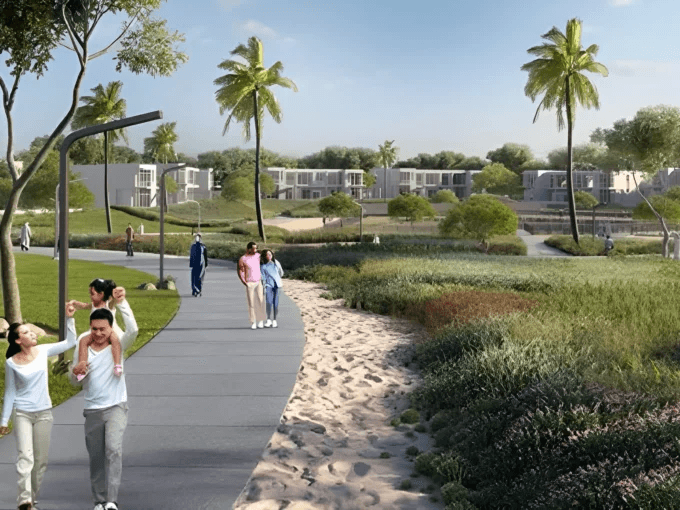
Emerging master‑planned communities (Emaar South, The Valley, Damac Hills 2, etc.)
On the fringe, developers are rolling out large-scale communities such as:
- Emaar South
- The Valley
- Damac Hills 2
- Other master-planned projects around Dubai South, Al Qudra, and beyond the current urban core
Historically seen as too far out, these locations are gaining traction thanks to:
- Improved infrastructure and road links
- New schools, healthcare, malls, and leisure facilities
- Remote and hybrid work reducing the pressure to live right next to business districts
For you, these areas often combine:
- More affordable entry prices
- Potentially higher growth rates in an upcycle
- Competitive yields on townhouses and mid-market apartments
Rental yields, capital appreciation & overall returns
Dubai stands out globally for its combination of rental income and capital growth potential.
- Gross rental yields around 7% on average citywide
- Higher yields in smaller units and mid-market communities
- Lower, but still solid, income returns in ultra-prime villas and branded residences (where the trade-off is prestige and capital safety)
When you factor in:
- Zero annual property tax
- No capital gains tax on property sales
- 0% personal income tax at the federal level
…the net yield profile of Dubai real estate can look extremely attractive versus high-tax jurisdictions, even before you consider price appreciation.
Commercial market trends: offices, retail & logistics
The Dubai real estate market isn’t just about homes. Commercial property—offices, retail, hospitality, and logistics—is a major part of the investment story.
Office market review: Grade A space in high demand
Recent Dubai office market reviews highlight a clear pattern:
- Strong demand for Grade A office space in core business districts (DIFC, Downtown, SZR, Business Bay, DMCC)
- Corporate relocations and regional HQ setups are supporting leasing activity
- Post-pandemic, tenants are prioritising:
- Flexible layouts and hybrid-work readiness
- High-quality amenities and wellness features
- Central, well-connected locations
For investors, institutional-quality office buildings and well-leased Grade A assets can provide longer-term, stable income streams, though smaller strata offices in fringe areas carry higher vacancy risk.
Retail & hospitality: experiential, F&B‑led formats
Dubai’s position as a shopping and tourism hub keeps demand strong for destination retail and F&B spaces.
- High tourist footfall supports leading malls and lifestyle destinations.
- Investors are focusing less on generic retail strips and more on experience-led, F&B-anchored formats that are harder to replace with e-commerce.
Prime street retail and units within high-performing malls or waterfront promenades tend to attract steady demand, although careful tenant and lease analysis is critical.
Industrial & logistics: benefiting from e‑commerce and trade
Dubai’s industrial and logistics market has been another strong performer, backed by:
- Rapid growth in e-commerce
- Dubai’s role as a global trade and logistics hub
- Reconfigured regional supply chains and near-shoring trends
High-spec warehouses, last-mile logistics facilities, cold storage and specialist industrial units are increasingly sought-after by institutional and family office investors for their long leases and stable, bond-like income.
Key drivers of Dubai’s real estate demand
Underpinning all these segments is a set of structural drivers that explain why global investors continue to allocate capital to Dubai real estate.
- Global investor appetite: Buyers from the UK, Europe, India, Saudi Arabia, China, Hong Kong, Singapore and beyond see Dubai as a safe, efficient, and lifestyle-rich hub.
- Tax advantages: Zero property tax, no capital gains tax, and no personal income tax significantly enhance net returns.
- World-class infrastructure: Metro, roads, airports, ports, and new districts continually improve connectivity and quality of life.
- Safety & political stability: Low crime and predictable governance support Dubai’s “safe haven” status.
Sustainability, healthcare, education & sector themes
Another emerging trend in Dubai real estate market research is the focus on ESG and sector-specific assets.
- Green and energy-efficient buildings are moving from marketing buzzwords to real investment criteria.
- Dubai’s COP28 hosting and long-term sustainability goals are pushing higher construction and operational standards.
- Healthcare real estate—hospitals, clinics, wellness centres, medical hotels—is growing alongside medical tourism ambitions.
- Education-linked assets—schools and student housing—benefit from demographic growth and the expansion of international curricula.
- Hospitality & branded residences remain central to Dubai’s tourism and lifestyle strategy, offering hybrid usage and income models.
For more sophisticated investors, these sectoral themes offer ways to align with long-term policy priorities and institutional demand.
Dubai property price history & 2025–2026 outlook
When you look at Dubai property price history, the pattern over the past decade has shifted from sharp boom-bust swings towards more measured, fundamentals-driven cycles.
Recent research and forecasts for the Dubai real estate market outlook 2025–2026 point to:
- Ongoing, but more moderate price growth compared with the immediate post-pandemic rebound
- Continued strength in prime, well-located and high-quality assets
- Outperformance in maturing master-planned communities with improving infrastructure
Will Dubai property prices decline in 2026?
Most current research frames it this way:
- A broad, systemic market crash looks unlikely as long as:
- Population growth stays strong
- Tourism and GDP continue to expand
- Dubai’s tax advantages remain intact
- Price growth is expected to cool from earlier spikes, especially in some over-heated sub-markets.
- Certain areas or asset types with heavy supply could see flat or slightly lower prices as new projects come online.
The practical takeaway for you: this is less a “get in at any price” market, and more a selective, data-driven market where community choice, asset quality, and micro-location matter a lot.
Key risks to watch in the Dubai property market
Even in a strong market, you should keep an eye on risk factors that could affect your investment thesis:
- Global macro shocks (recession, higher-for-longer rates, geopolitical events)
- Over-supply in specific product types (e.g. too many similar off-plan apartments in the same corridor)
- Regulatory changes around corporate tax, visas, or property rules
- Rental affordability pressure leading to policy responses or slower rent growth in some segments
This is why it’s critical to work with current Dubai real estate market reports, research & guides rather than relying on outdated narratives.
Practical investment strategies by profile
How you use these Dubai real estate insights depends on what you want from the market. Here’s how different investor profiles might approach it.
International buy‑to‑let investors
- Target mid-market apartments and townhouses in:
- Maturing master-planned communities like Emaar South, The Valley, Damac Hills 2
- Established but still affordable areas with good transport links
- Focus on:
- Yield and tenant demand (schools, business hubs, amenities)
- Service charges and realistic net yields, not just headline gross figures
- Diversify across developers and communities to reduce concentration risk.
HNWI & UHNW investors
- Prioritise prime and ultra-prime assets:
- Waterfront villas, branded residences, trophy penthouses
- View returns in terms of:
- Capital preservation and long-term upside in supply-constrained locations
- Portfolio diversification across global cities
- Consider selective exposure to hospitality, healthcare, and education real estate as co-investments.
Institutional investors & family offices
- Look for income-generating assets in:
- Grade A offices in core districts
- Modern logistics and industrial warehouses
- Stabilised multifamily/residential portfolios
- Healthcare and education assets with strong operators
- Integrate ESG criteria and green financing where possible.
- Structure deals with long leases and quality covenants to create predictable cash flows.
How to approach the Dubai real estate market strategically
To turn these trends and predictions into an actionable strategy, you should:
- Start with the macro and demographics Check population growth, employment hubs and infrastructure plans in the areas you’re considering—not just today’s price per square foot.
- Clarify your primary objective
Are you buying for:
- Yield and cash flow?
- Capital appreciation?
- Lifestyle?
- Institutional-grade, long-duration income?
- Use data-backed research and market reports Rely on up-to-date market reviews, price indices, rental benchmarks and community performance data rather than anecdotes.
- Focus on asset and developer quality Track record, construction quality, building management and service charges all feed into your real net yield and resale value.
- Plan your exit upfront Consider who your eventual buyer is likely to be and how liquid the community is. This matters as much as your entry price.
- Monitor policy updates Keep an eye on corporate tax rules and property ownership regulations so your plan stays aligned with the latest framework.
Quick FAQ: Dubai real estate market trends & investment insights
Is Dubai still a safe haven for real estate investors?
Yes. Strong population and tourism growth, political stability, a low-tax environment, and robust infrastructure continue to position Dubai as a global safe-haven real estate market.
What kind of rental yields can I expect in Dubai?
Average gross yields sit around 7% citywide, with some mid-market segments achieving higher returns and ultra-prime assets delivering slightly lower yields but strong capital-preservation characteristics.
Should I buy off‑plan or ready property?
Off-plan can offer lower entry prices and strong capital appreciation potential, but comes with construction and timing risk. Ready properties give you immediate rental income and clearer visibility on actual building quality and community maturity. The right choice depends on your risk tolerance and time horizon.
Will Dubai property prices fall in the next few years?
A broad market crash is not what most current research is pointing to. Instead, expect moderating growth and more differentiation between strong and weak sub-markets. Selection and due diligence matter more now than simple market timing.
Next steps: stay ahead of the Dubai property market
If you want to stay ahead of Dubai real estate market trends and make genuinely data-driven decisions, build your process around three habits:
- Regularly review current market reports and price indices for the communities you care about.
- Track changes in rents, yields, and supply pipelines rather than just headline sale prices.
- Align every purchase with a clear investment thesis—why this asset, in this location, at this point in the cycle.
The Dubai property market has matured into a globally recognised, high-performing, low-tax investment destination. If you treat it like a serious asset class—grounded in research, not hype—it can become a resilient, long-term pillar in your portfolio.