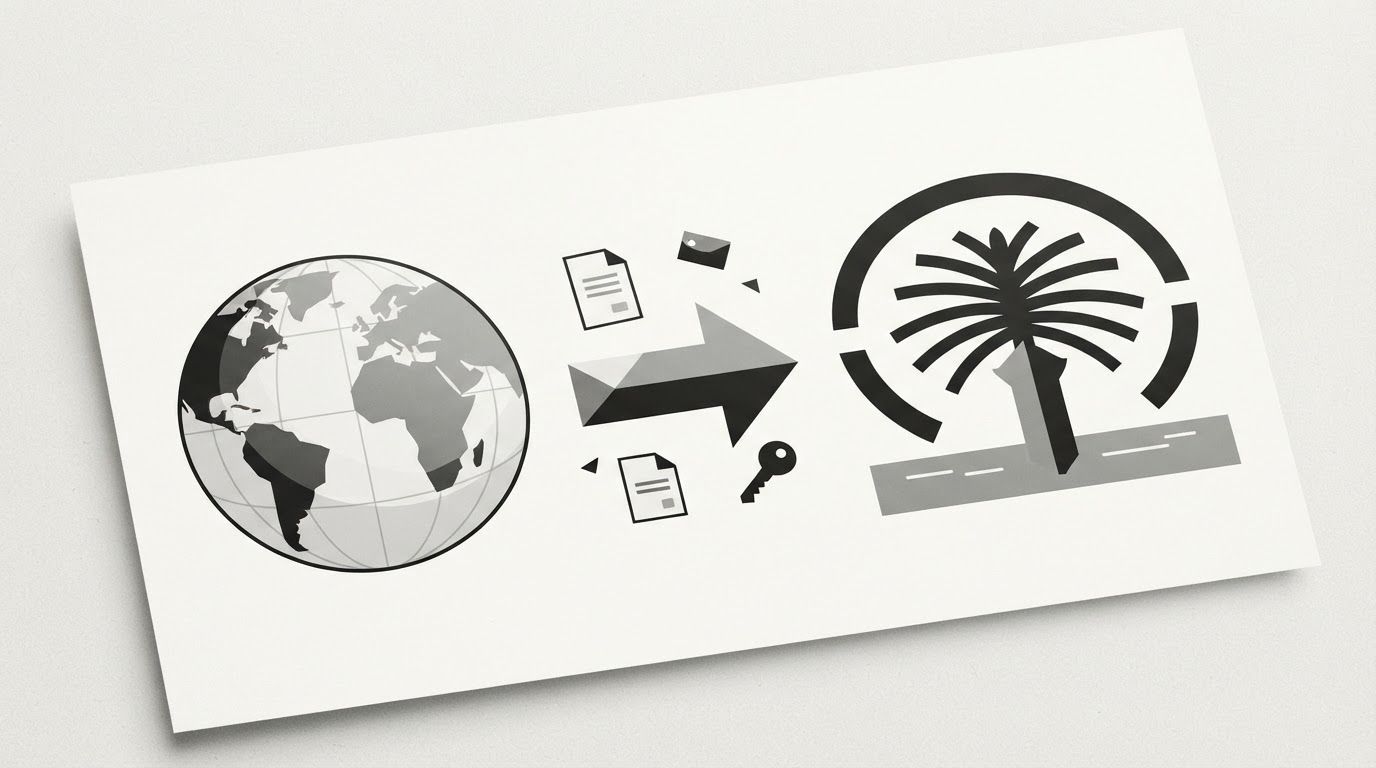


Yes. Palm Jumeirah is one of Dubai's designated freehold areas, which means foreign nationals can buy full ownership of an apartment or villa there, not just a long lease. Nakheel, the developer behind Palm Jumeirah, confirms this directly: Palm Jumeirah is a designated freehold area, allowing foreign nationals full ownership rights for apartments and villas.
What freehold actually means
Freehold ownership means you own the property outright, with your name on the title deed, for as long as you want — there's no expiry date and no landlord above you. This is different from leasehold, where you hold rights to use a property for a fixed term, often 99 years, but someone else still owns the land underneath.
The right for non-UAE nationals to hold freehold title exists because of a specific piece of legislation: Regulation No. 3 of 2006, issued under Dubai Law No. 7 of 2006. It states that "non-UAE nationals may acquire freehold ownership rights over real property without time restriction" in the areas the Dubai government has designated for this. Palm Jumeirah is one of those designated areas.
In practice, this means a foreign buyer on Palm Jumeirah owns the unit outright: they can sell it, rent it out, or use it themselves, with the title registered in their name at the Dubai Land Department (DLD).
Do you need a UAE residency visa to buy?
No. Buying property on Palm Jumeirah doesn't require a UAE residency visa, and you don't need to be a resident to hold title. You can complete the purchase as a visitor, or without visiting Dubai at all — more on that below. What you do need is a valid passport and the funds to complete the purchase.
Documents you'll need
For a standard resale purchase, buyers are typically asked for:
- A valid passport copy.
- Proof of address.
- Proof of funds, or proof of income if the purchase involves a mortgage.
- If the property already has a mortgage or was previously owned, a No Objection Certificate (NOC) from the developer confirming there's nothing outstanding before the transfer can go through.
Your agent or the seller's agent will confirm the exact list for a specific property, since it can vary slightly depending on how the current owner holds the title.
Buying without traveling to Dubai
You don't have to be physically present in Dubai to buy on Palm Jumeirah. The usual route is a power of attorney (POA): a legal document that lets someone you trust — often a lawyer, or in some cases your agent — sign the transfer paperwork and register the sale on your behalf.
Getting a POA no longer means finding a notary in person. The UAE Ministry of Justice runs a digital service that lets you generate a "digital ratified power of attorney documents in less than 10 minutes and without the need to visit a notary public office." If you're outside the UAE, your lawyer or agent can tell you the equivalent way to issue a valid power of attorney from where you are.
What it costs to buy — beyond the property price
The price you agree with the seller isn't the full cost of the transaction. The main fixed charges are set by the Dubai Land Department:
| Charge | Amount |
|---|---|
| DLD transfer fee | 4% of the sale value |
| DLD registration fee (property under AED 500,000) | AED 2,100 |
| DLD registration fee (property AED 500,000 or above) | AED 4,200 |
On top of that, there's the agent's commission, which is a matter of agreement between you and the agency rather than a fixed government fee, so it's worth confirming it upfront before you make an offer. We don't publish a set figure here because it varies by transaction — ask your agent to lay it out before you sign anything.
What we can't tell you is the price of a specific unit on Palm Jumeirah: that depends on the frond, the building, the view, and the condition, and changes with every listing. An agent working the island day to day can walk you through current inventory and what's driving pricing in a given tower or frond.
Before you pay — checking who you're dealing with
Palm Jumeirah draws a lot of buyer interest, and with that comes agents and listings that aren't always what they claim to be. Two checks are worth doing before you commit to anything:
- Confirm the agent is licensed. Every real estate professional working in Dubai is expected to carry a RERA e-card issued by the Real Estate Regulatory Agency (RERA), and the Dubai Land Department runs an official service that lets you verify that card. Ask for the agent's RERA number and check it before you sign.
- Confirm the seller is the real owner. The title deed, held or verifiable through the DLD, should match the name of the person selling to you. Your conveyancer or the DLD's own registration process will confirm this as part of the transfer, but it's reasonable to ask to see it earlier if something feels off.
None of this replaces proper legal advice on a specific contract — for that, a licensed conveyancer or property lawyer in Dubai is the right person to ask.
What happens to the property if you don't plan ahead
Foreign ownership on Palm Jumeirah doesn't automatically bring the inheritance rules you might expect from home. Without a registered will, your estate may not be distributed the way you'd choose by default. The DIFC Wills Service (DIFC: Dubai International Financial Centre), a joint initiative of the Dubai government and the DIFC Courts, lets non-Muslims investing or living in the UAE register a will so their assets pass the way they intend. It's worth setting this up before you complete the purchase, not after.
Frequently asked questions
Can I get a Golden Visa if I buy property on Palm Jumeirah?
Buying real estate can make you eligible to apply for a Golden Visa, but eligibility isn't the same as approval. The published criterion from the Dubai Land Department is that the property or properties, combined, are worth AED 2 million and wholly owned by the applicant. Meeting that threshold means you can apply — the outcome of the application itself isn't something anyone can promise.
Can foreigners get a mortgage to buy on Palm Jumeirah?
Yes, non-resident foreign buyers can generally access financing through UAE banks, though the amount you can borrow depends on the bank, your income, and your residency status. YouTube channel ANUVI Business Solutions DXB said in January 2026 that foreign buyers could access financing up to 75% of a property's value, but loan-to-value limits vary by lender, so confirm current terms with a bank or mortgage broker before assuming a figure.
Is Palm Jumeirah the only freehold area in Dubai?
No. Palm Jumeirah is one of several designated freehold areas in Dubai. What makes it distinct is the island itself and its layout, not the ownership rules, which follow the same freehold framework across all designated areas.
Do I need to open a UAE bank account to buy?
It isn't a legal requirement to complete the purchase, though many buyers find it practical once they own property in Dubai, particularly for paying service charges or managing a mortgage.
Can I buy jointly with someone else, or in a company name?
Yes, freehold property on Palm Jumeirah can be bought in joint names or through a company structure. The paperwork differs from a straightforward individual purchase, so plan for it early rather than after you've made an offer.
If you're weighing Palm Jumeirah against other freehold communities, our Palm Jumeirah area guide covers what living there is actually like, and our guide on freehold vs. leasehold ownership in Dubai goes deeper into how the two systems compare.
For the full purchase process from offer to title transfer, see how to buy property in Dubai as a foreign investor. And when you're ready to see what's actually available, our current Palm Jumeirah listings are a good place to start.
Jlenia Dominici is an agent at C&B Real Estate, working in Dubai's secondary market. C&B Real Estate holds RERA ORN 27543.